
Summary:
Start With Your Thermostat Settings and Power Supply
Before diving into complex troubleshooting, verify the basics that cause most “emergency” calls that aren’t actually emergencies. Your thermostat might be set incorrectly, or you might have a tripped breaker.
Check that your thermostat is set to “Cool” mode, not “Heat” or “Off.” The temperature should be set at least 3-4 degrees below the current room temperature. If your fan setting shows “On,” switch it to “Auto”—this prevents the system from blowing warm air when it’s not actively cooling.
Next, locate your main electrical panel and look for any tripped breakers. AC units in Las Vegas, NV work hard and can trip breakers during peak demand. A tripped breaker will be in the middle position, not fully “On” or “Off.” Reset it by switching it fully off, then back on.
Check and Replace Your Air Filter Immediately
A dirty air filter is the most common cause of AC blowing lukewarm air, yet it’s often overlooked during emergency situations. In Las Vegas’s dusty desert climate, filters clog faster than in other regions.
Locate your air filter—it’s typically near the indoor unit, in a return air vent, or in the furnace compartment. Remove it and hold it up to the light. If you can’t see through it clearly, or if it’s visibly dirty, it needs immediate replacement.
A clogged filter restricts airflow over your evaporator coil, causing several problems. First, your system can’t move enough air to cool your home effectively. Second, the restricted airflow can cause the evaporator coil to freeze, which completely stops cooling and can damage your compressor.
Don’t just clean a disposable filter—replace it. Cleaning doesn’t remove all the embedded particles, and a partially clean filter will clog again quickly. Keep spare filters on hand during summer months, as you might need to change them every 30 days instead of the typical 90 days.
If you’ve been running your AC with a severely clogged filter, your evaporator coil might already be frozen. After replacing the filter, turn your system off for 2-3 hours to let any ice melt completely before turning it back on.
Inspect Your Outdoor Unit for Obvious Problems
Your outdoor condenser unit works overtime in Las Vegas heat, and several visible issues can cause cooling problems. Walk outside and give your unit a thorough visual inspection.
First, ensure the unit is getting power. You should hear the fan running and feel air blowing out the top when the system is calling for cooling. If the outdoor unit is completely silent while your indoor unit runs, you likely have an electrical issue that requires professional attention.
Check around the base of the unit for standing water, which might indicate a refrigerant leak or drainage problem. Look for any obvious damage to the unit, like bent fins, loose panels, or debris stuck in the fan. Never stick anything into a running unit to remove debris.
Clear any vegetation, debris, or objects within two feet of the unit. Your condenser needs adequate airflow to reject heat effectively. In dusty Las Vegas conditions, the outdoor coils can become caked with dirt and dust, reducing efficiency dramatically.
You can gently spray the outside of the unit with a garden hose to remove surface dirt, but avoid high-pressure washing which can damage the delicate fins. If the coils appear heavily soiled or the fins are significantly bent, professional cleaning is necessary.
Pay attention to any unusual sounds—grinding, squealing, or clicking noises often indicate failing components that need immediate professional attention to prevent more expensive damage.
When to Stop DIY Troubleshooting and Call Emergency AC Services
Some AC problems require immediate professional intervention to prevent damage, safety hazards, or complete system failure. Knowing when to stop troubleshooting and call emergency AC services can save you thousands in repair costs.
Stop immediately if you smell gas, burning odors, or notice any electrical sparking. These indicate serious safety hazards that only qualified technicians should address. Similarly, if you hear loud banging, grinding, or squealing noises from your outdoor unit, shut the system off and call for help.
Ice formation on your indoor or outdoor coils also requires professional attention. While you can turn the system off to let ice melt, the underlying cause—whether it’s low refrigerant, airflow problems, or mechanical issues—needs professional diagnosis.
Clear Your Condensate Drain Line Safely
A clogged condensate drain line can cause your AC to stop cooling or shut down completely. In Las Vegas’s dry climate, you might not expect drainage issues, but your AC removes significant moisture from indoor air, especially if you have leaky ducts pulling in humid outside air.
First, turn off power to your AC system at both the thermostat and the electrical panel. Locate your condensate drain line—it’s typically a PVC pipe near your outdoor unit or extending from your indoor air handler.
Check if water is dripping from the line. If it’s completely dry when your system has been running, the line might be clogged. Look for the drain pan under your indoor unit. If it contains standing water, your drain line is definitely blocked.
You can attempt to clear minor clogs by locating the drain line’s cleanout port (usually a T-shaped fitting with a removable cap near the indoor unit). Remove the cap and use a wet/dry vacuum to suction out debris from the line opening outside your home.
For safety, avoid using chemical drain cleaners not specifically designed for HVAC systems. A mixture of equal parts white vinegar and water can help dissolve algae buildup, but let it sit for 30 minutes before flushing with clean water.
If water continues backing up after your attempts, or if you discover significant mold growth around the drain area, professional cleaning is necessary. Persistent drainage issues often indicate problems with the drain pan slope, multiple blockages, or damaged drain lines that require expert AC repair.
What Information Emergency Technicians Need for Faster Service
When you do need to call emergency AC services in Las Vegas, NV, having the right information ready helps technicians diagnose problems faster and bring the correct parts on their first visit.
Note your system’s age, brand, and model number if possible. The model number is usually on a metal plate attached to your outdoor unit. Take a photo of this plate with your phone—it contains vital information about refrigerant type, electrical requirements, and manufacturing specifications.
Document exactly what you’ve observed: when the problem started, what the system is doing (or not doing), any unusual sounds or smells, and what troubleshooting steps you’ve already taken. This prevents duplicate work and helps technicians focus on the most likely causes.
Prepare your home for the technician’s arrival by ensuring clear access to both your indoor and outdoor units. Move furniture, storage boxes, or other obstacles that might slow down the diagnostic process. In emergency situations, every minute counts.
Be ready to describe your home’s cooling patterns. Is the problem affecting your entire house, or are some rooms still getting cool air? This information helps technicians determine whether the issue is with your main system, ductwork, or zoning controls.
Finally, know your comfort priorities and budget constraints upfront. Emergency repairs sometimes offer multiple solution options—from temporary fixes to get you through the heat wave to permanent repairs that prevent future problems. Clear communication about your needs helps technicians recommend the best approach for your situation.
Stay Cool and Know When Professional Help Is Essential
These troubleshooting steps can resolve many common AC problems that seem like emergencies but have simple solutions. However, Las Vegas’s extreme heat means you can’t afford to spend too much time on DIY attempts when professional help is needed.
Remember the key warning signs that require immediate professional attention: electrical issues, refrigerant leaks, mechanical failures, or persistent problems after you’ve checked the basics. Your safety and your system’s longevity depend on knowing these limits.
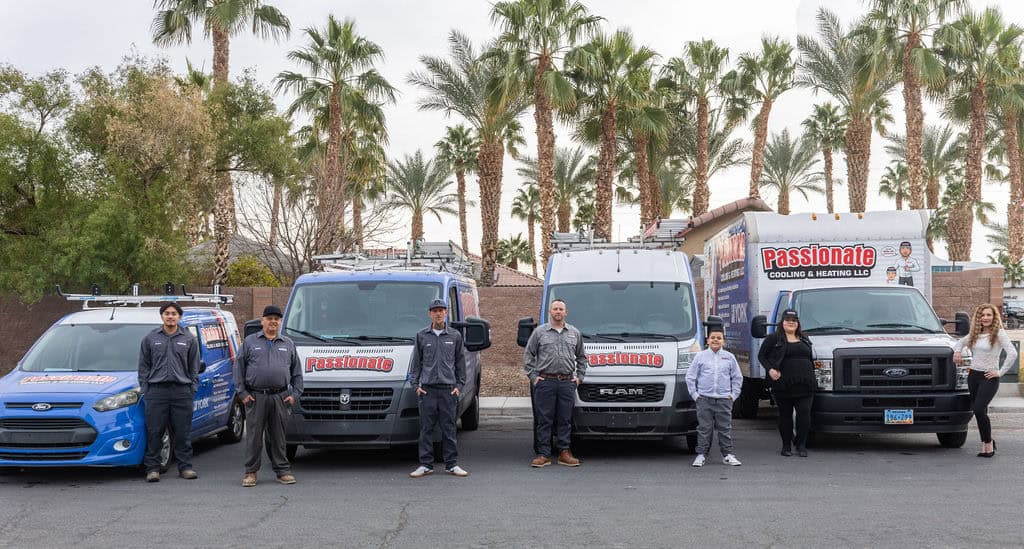
When you do need emergency AC services, we at Passionate Cooling & Heating LLC provide 24/7 response throughout Clark County with transparent pricing and experienced technicians who understand Las Vegas’s unique climate challenges. Don’t let a small problem become a major repair—sometimes the fastest solution is calling us first.