Summary:
Why Las Vegas Heat Destroys HVAC Systems Faster
Most air conditioners are designed to handle 20 to 25-degree temperature differences between indoor and outdoor air. When it’s 115 degrees outside and you want your home at 75, you’re asking your system to bridge a 40-degree gap it was never engineered for.
That extreme differential forces every component to work at maximum capacity. Your compressor runs continuously instead of cycling on and off. Refrigerant pressure spikes beyond normal operating ranges. The condenser coils struggle to release heat into air that’s already scorching.
This constant strain doesn’t just make your system work harder—it fundamentally changes how quickly parts wear out. Components that would last 15 years in Phoenix or Tucson might give you 10 in Las Vegas. The difference isn’t the heat alone; it’s the duration and intensity combined with our unique desert conditions.
How Continuous Operation Wears Down Your System
Unlike moderate climates where AC units cycle on and off throughout the day, Las Vegas systems often run 12 to 16 hours daily from May through September. That’s not occasional use—that’s essentially a full-time job for equipment that was designed for intermittent operation.
Every hour your system runs, moving parts create friction. Electrical connections heat up and cool down. Refrigerant flows through coils under pressure. In a normal climate, these components get breaks between cycles to cool down and recover.
Your system doesn’t get those breaks. The compressor—the heart of your AC—runs continuously, generating heat while simultaneously trying to move heat out of your home. Fan motors spin for hours without stopping. Capacitors that help start these motors work overtime, and they’re often the first components to fail under this relentless demand.
The wear isn’t linear, either. A system running 16 hours a day doesn’t wear out twice as fast as one running 8 hours—it wears out exponentially faster because components never get the chance to cool down and recover. Metal expands from heat, seals dry out, and lubricants break down more quickly under sustained high temperatures.
This is why the standard advice to service your AC once a year doesn’t quite cut it in Clark County. Your system experiences more stress in one Las Vegas summer than systems in temperate climates see in two or three years. That compressed timeline means you need to be more proactive, not less.
Desert Dust Creates Maintenance Nightmares
The Mojave Desert doesn’t just bring heat—it brings dust, and lots of it. Your outdoor condenser unit sits exposed to fine desert particles that infiltrate every surface. A single dust storm can deposit enough debris to clog an air filter in 24 hours, not the 30 to 90 days you’d expect in other climates.
This dust accumulation happens faster than most homeowners realize. Your outdoor condenser coils, which need to release heat efficiently, become coated with a layer of dirt and debris. That coating acts like insulation, preventing your system from dumping heat effectively. The result? Your AC works harder, uses more energy, and still struggles to keep your home cool.
Indoor air filters face the same challenge. In Las Vegas homes, filters need replacement every four to eight weeks instead of the standard three-month interval. If you’re following the schedule printed on the filter package, you’re already behind. A clogged filter restricts airflow across your evaporator coils, forcing your blower motor to work harder and potentially causing the coils to freeze up—yes, even when it’s 110 degrees outside.
The dust problem compounds during our monsoon season and high-wind events. What takes months to accumulate in humid climates can happen in days here. Homeowners who don’t check their filters regularly often discover their system has been struggling for weeks with severely restricted airflow, driving up energy bills and putting unnecessary strain on components.
This is where professional AC maintenance becomes critical. Standard garden hoses can’t eliminate the debris that gets packed into condenser coil fins. You need specialized equipment and cleaning solutions to thoroughly remove the buildup that accumulates in our desert environment. Skipping this deep cleaning is like asking your system to run a marathon while breathing through a straw—technically possible, but you’re going to pay for it.
When to Schedule AC Maintenance in Clark County
Timing your HVAC maintenance isn’t just about convenience—it’s about catching problems before they become emergencies. In Las Vegas, the optimal window for your primary maintenance visit is March through early May, before temperatures climb into triple digits and before every HVAC company’s schedule fills up.
Scheduling in spring gives you a critical advantage: if your technician discovers a problem, you have time to fix it before you desperately need your AC. Waiting until June means you’re competing with everyone else who neglected their system, facing longer wait times and potentially higher prices during peak demand.
For Clark County’s extreme climate, twice-yearly service has become the gold standard. Spring maintenance prepares your system for the brutal summer ahead. Fall maintenance cleans off the heavy dust and strain accumulated over those long, hot months and prepares your heating components for winter. This isn’t overkill—it’s smart planning for equipment that works harder than systems almost anywhere else in the country.

What Professional Spring Maintenance Should Include
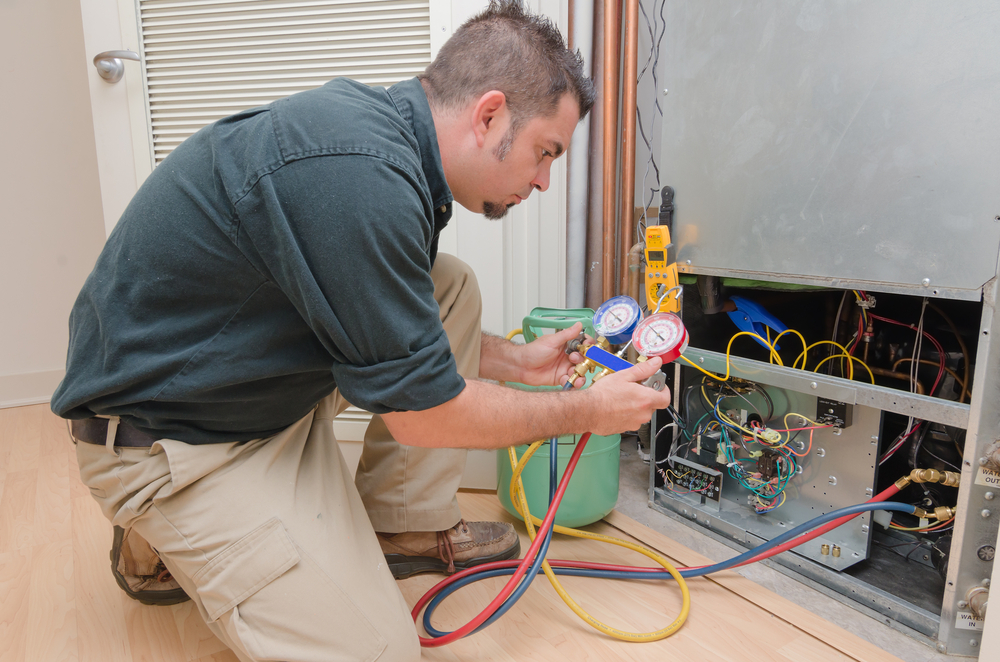
A proper spring tune-up goes far beyond changing your filter and calling it a day. Professional maintenance should include checking and adjusting refrigerant levels, because even small leaks become major problems when your system runs continuously through summer. Low refrigerant forces your compressor to work harder and can lead to complete system failure.
Your technician should calibrate your thermostat to ensure it’s reading temperatures accurately. A thermostat that’s off by even a few degrees can cause your system to run longer than necessary, wasting energy and creating unnecessary wear. They should clean both your evaporator coils inside and condenser coils outside, removing the dust and debris that acts as insulation and prevents efficient heat transfer.
Electrical connections need inspection and tightening. Loose connections create resistance, generate heat, and can lead to component failure or even fire hazards. Capacitors—the components that help start your compressor and fan motors—should be tested, because they’re among the most common failure points in systems that run continuously.
The condensate drain line needs checking and flushing. In our dry climate, people forget that AC systems generate water as they remove humidity from indoor air. A clogged drain can cause water damage to your home and force your system to shut down. Your ductwork should be inspected for leaks, because even small gaps waste cooled air and force your system to work harder.
This comprehensive approach catches the small issues before they cascade into expensive repairs. A worn capacitor costs $150 to replace during a maintenance visit. That same capacitor failing in July might mean no AC for days while you wait for emergency service, plus the cost of a rush repair when technicians are swamped.
Monthly Maintenance Tasks You Can Handle Yourself
Between professional visits, there are simple tasks that make a real difference in how well your system performs. Checking and changing your air filter monthly during summer isn’t optional in our climate—it’s essential. Set a reminder on your phone for the first of every month from May through October. If you have pets or if dust storms have been frequent, check it even more often.
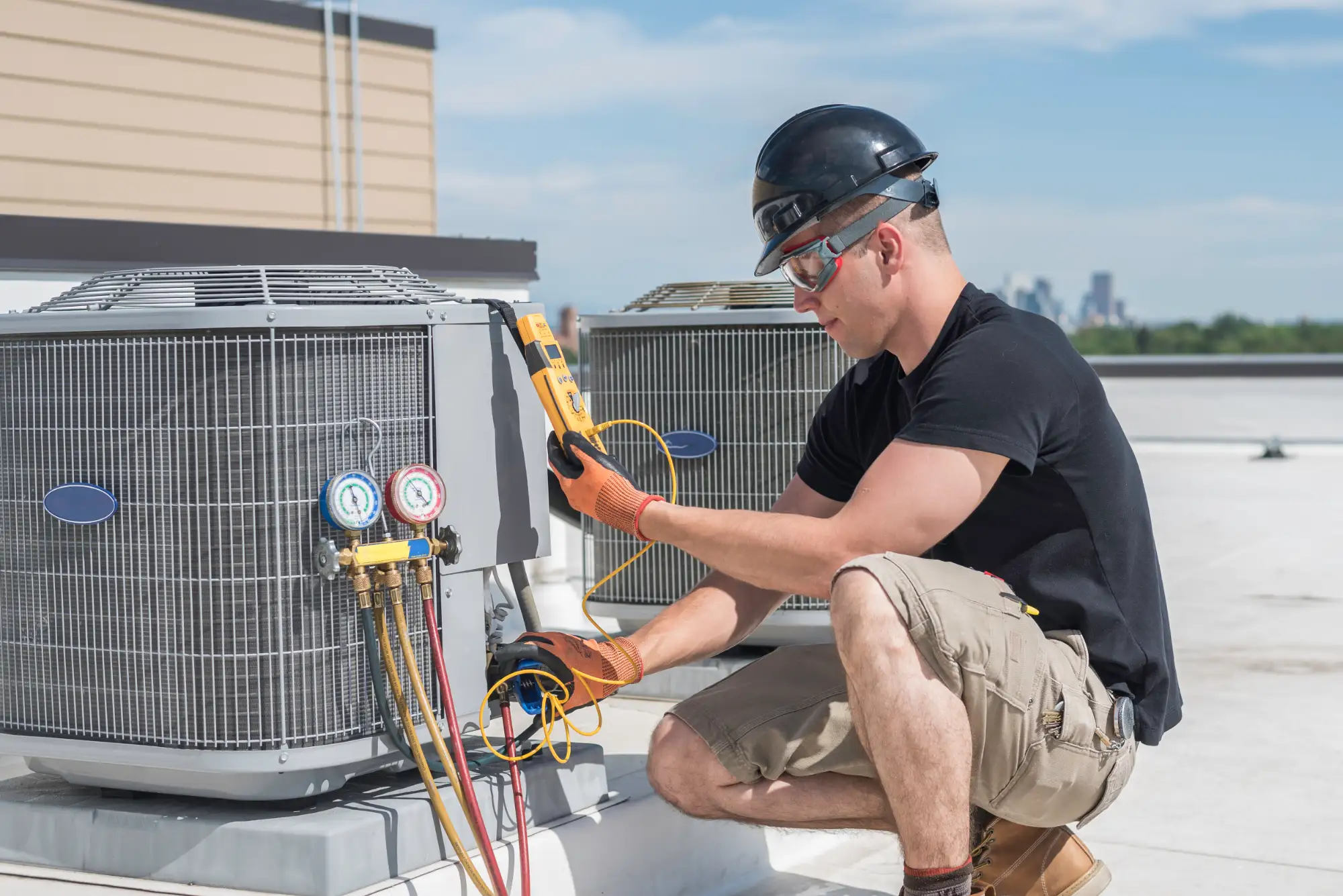
Keep the area around your outdoor unit clear. Desert landscaping is great, but plants and shrubs need to stay at least two to three feet away from your condenser unit. Adequate airflow around the unit is critical for heat dissipation. After dust storms, take a few minutes to gently rinse debris off the exterior of your condenser unit with a garden hose. Don’t use high pressure—you can damage the delicate fins—but a gentle rinse removes surface dust.
Pay attention to your thermostat placement and settings. If it’s located near windows where direct sunlight hits, or near lamps that generate heat, it’s getting false readings that make your AC work harder than necessary. Keep curtains and blinds closed during peak sunlight hours to reduce the heat load on your system. Every degree of heat you prevent from entering your home is a degree your AC doesn’t have to remove.
Listen to your system. New or unusual noises—grinding, squealing, buzzing—are warning signs that something needs attention. If you notice ice forming on your indoor unit or the copper lines running to your outdoor unit, that’s a sign of restricted airflow or refrigerant issues that need professional diagnosis. Weak airflow from your vents, rooms that won’t cool evenly, or a system that cycles on and off rapidly all indicate problems that will only get worse if ignored.
These simple checks won’t replace professional maintenance, but they help you catch problems early and keep your system running efficiently between service visits. Think of it like checking your car’s oil between scheduled services—basic monitoring that prevents major problems.
Preparing Your HVAC System for Desert Summer Success
Las Vegas heat will always challenge your AC system, but understanding how extreme temperatures affect your equipment puts you ahead of most homeowners. The key is proactive maintenance timed for our specific climate, not reactive repairs when something fails at the worst possible moment.
Spring maintenance before temperatures climb, monthly filter changes during peak season, and attention to the warning signs your system gives you—these aren’t complicated strategies. They’re practical steps that extend your equipment’s life, prevent expensive emergency repairs, and keep your family comfortable when temperatures soar.
Don’t wait until your AC struggles on the first 115-degree day to discover you needed service weeks ago. Schedule your maintenance before the summer rush, when you have time to address any issues without the pressure of immediate need. At Passionate Cooling & Heating LLC, we bring 18 years of local experience and the technical expertise to keep your system running efficiently through comprehensive service designed specifically for Clark County’s desert climate—even when the temperature hits 120 degrees.