
Summary:
Signs Your Air Conditioning Repair Costs Are Getting Out of Hand
Your air conditioning system will usually give you warning signs before it completely fails. The question is whether you’re listening to what it’s telling you.
Most AC units in Clark County have a lifespan of 15-20 years, but the desert climate can accelerate wear significantly. If your system is approaching or exceeding this age range, repairs become less economical with each service call. You’re not just fixing one problem—you’re dealing with the cascade effect of aging components where today’s compressor repair leads to next month’s capacitor failure.
The $5,000 Rule for AC Repair vs Replacement Decisions
Here’s a simple formula that takes the guesswork out of your decision: multiply your system’s age by the estimated repair cost. If that number exceeds $5,000, replacement typically makes more financial sense.
For example, if your 12-year-old unit needs a $500 repair, you get $6,000—a clear signal that investing in a new system is the smarter move. This rule accounts for the reality that older systems are more likely to need additional repairs down the road.
But the $5,000 rule is just the starting point. In Las Vegas’s extreme climate, you need to consider additional factors that make this calculation even more compelling. Your old system is working overtime in 110°F+ heat, consuming significantly more energy than a modern unit would. While that repair might get you through this summer, what happens when another major component fails next year?
The math becomes even clearer when you factor in energy savings. Modern high-efficiency systems can save $200+ monthly during peak summer compared to older units. That’s $1,200+ annually that directly offsets your replacement investment. If you’ve been calling for repairs multiple times in recent years, those costs add up quickly and push you well over the $5,000 threshold.
Why 10+ Year Old AC Units Cost More to Run in Las Vegas
Age isn’t just a number when it comes to air conditioning—it’s a direct indicator of how much you’re overpaying for cooling. Systems installed 10-15 years ago typically operate at 8-10 SEER (Seasonal Energy Efficiency Ratio), while modern units reach 16-20 SEER or higher.
In Clark County’s extreme climate, this efficiency difference translates to substantial monthly savings. The desert heat forces your AC to work longer and harder than systems in moderate climates. An older, inefficient system running 12+ hours daily during summer months creates energy bills that can shock even seasoned Las Vegas residents.
Here’s what many homeowners don’t realize: your 15-year-old system isn’t just less efficient—it’s also more prone to breakdowns during peak demand. When temperatures soar above 110°F, older systems struggle to keep up, leading to short cycling, frozen coils, and compressor stress. These aren’t just comfort issues—they’re expensive problems waiting to happen.
The refrigerant situation adds another layer of complexity. Many older systems use R-22 Freon, which is being phased out due to environmental concerns. R-22 costs are increasing dramatically, and eventually, you’ll need to replace the system anyway to switch to the new R410A refrigerant. If your system is already having problems and uses the old refrigerant, replacement becomes an even more urgent consideration.
Benefits of AC Replacement Over Continued HVAC Repair
Replacement isn’t just about avoiding ac repair bills—it’s about upgrading your entire cooling experience. Modern systems offer features and efficiency levels that simply weren’t available when your current unit was installed.
The most immediate benefit is reliability. New systems come with comprehensive warranties and are designed to handle extreme heat without the constant breakdowns that plague older units. You’re not just buying cooling capacity—you’re buying peace of mind during the hottest months of the year.
Higher SEER Ratings Mean Lower Bills and Better Comfort
The efficiency gains from replacement go beyond just lower energy bills, though those savings are substantial. Modern variable-speed systems adjust their output based on actual cooling demand, avoiding the wasteful full-power cycling that drives up costs with older units.
In Las Vegas, where your AC might run 12+ hours daily during summer, these efficiency improvements compound quickly. A high-efficiency replacement can reduce your cooling costs by 20-40% compared to an aging system. Over the 15-20 year lifespan of a new unit, those savings often exceed the initial investment cost.
But efficiency isn’t just about money—it’s about comfort too. Modern systems provide more consistent temperatures throughout your home, better humidity control, and quieter operation. Variable-speed technology means fewer hot and cold spots, more even cooling, and less of the temperature swings that make older systems uncomfortable.
Advanced features like smart thermostats, zoned cooling, and improved air filtration also contribute to better indoor air quality. In Las Vegas’s dusty desert environment, these improvements can make a significant difference in your family’s health and comfort. The combination of better efficiency, improved comfort, and enhanced air quality makes replacement a comprehensive upgrade to your home’s livability.
How to Choose the Right AC Unit for Clark County, NV
Selecting the right replacement system requires understanding Clark County’s unique cooling demands. The extreme heat, long cooling season, and dusty conditions mean you need more than just basic cooling capacity—you need a system engineered for desert performance.
SEER ratings are crucial, but in Nevada, you can’t legally purchase a central AC system with a rating lower than 15 SEER. For optimal efficiency in our climate, aim for at least 16 SEER, which strikes the right balance between upfront cost and monthly energy savings. Higher SEER units (18-20+) offer even greater efficiency but require careful cost-benefit analysis based on your specific usage patterns.
System sizing is equally important and more complex than many homeowners realize. Las Vegas systems need 15-20% more capacity than moderate climates due to extreme temperatures and longer operating hours. However, oversizing can be just as problematic as undersizing, leading to short cycling, poor humidity control, and reduced efficiency.
Professional load calculations consider your home’s square footage, insulation quality, window exposure, ductwork condition, and local climate factors. This ensures your new system can handle 115°F days without overworking while maintaining efficiency during milder weather. We also evaluate your existing ductwork, electrical service, and any needed upgrades to support your new system properly.
Making the Smart AC Repair vs Replacement Choice
The decision between repair and replacement doesn’t have to be overwhelming when you understand the key factors. Use the $5,000 rule as your starting point, but remember that Las Vegas’s extreme climate makes replacement even more compelling for aging systems.
Consider the total cost of ownership, not just the upfront expense. Factor in energy savings, reliability improvements, and the peace of mind that comes with a new system designed to handle our desert conditions. When your family’s comfort and safety depend on reliable cooling, investing in the right solution makes perfect sense.
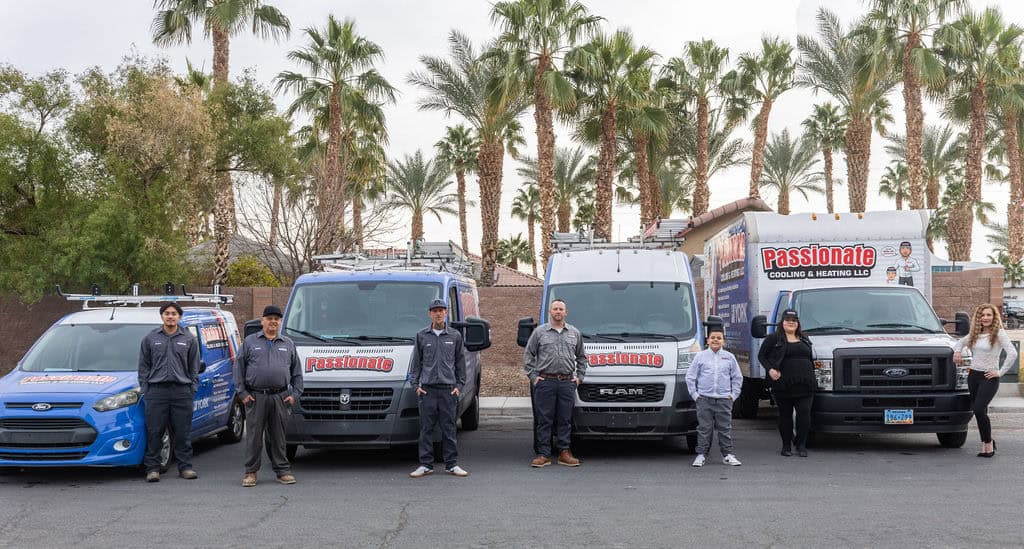
If you’re facing this decision, we at Passionate Cooling & Heating LLC can provide the expert evaluation you need to make the right choice for your specific situation.